

Print Industry Reviews, Quality and Production Standards
Practical reviews and production guidance help print buyers and teams evaluate vendors, control quality, and prevent costly workflow mistakes.
Print Industry Reviews, Quality and Production Standards
Print decisions rarely fail in one dramatic moment. They unravel through a vague quote, an unchecked file, an incomplete proof, the wrong material, or a finish that was discussed but never documented. Hiles examines those decisions from a production-first perspective so print buyers and teams can identify the variables that matter before a job becomes costly, late, or difficult to correct.
A printer is more than a checkout page. The useful questions concern what the company produces well, how clearly it handles specifications, whether its proofing process supports an informed approval, and how predictable the result is when the job reaches production. Reviews and vendor comparisons focus on practical fit rather than treating one product score or attractive price as a universal verdict.
Quality also needs context. Color, registration, resolution, cutting, adhesion, lamination, coating, and other finishing details behave differently across processes and materials. Hiles explains those differences in terms of the decision they change: what to specify, what to inspect, what tolerance is reasonable, and when a more controlled process is worth the additional time or expense.
Prepress and proofing coverage connects file preparation to the finished piece. A file can be technically printable and still create weak borders, excessive ink coverage, unclear finishing expectations, or an avoidable approval dispute. The goal is to help designers, customer-service teams, and production staff recognize those risks while there is still time to ask a useful question.
The publication also covers equipment, materials, procurement, training, and operating standards. That includes choosing processes for the application, improving handoffs, setting vendor expectations, documenting production notes, training staff to evaluate quality consistently, and building escalation rules for problems. Technical depth is used to make work more predictable, not to make ordinary decisions sound unnecessarily mysterious.
Latest from Hiles


Better Print Decisions Start Before Production
A strong print specification describes the finished requirement, not merely the product name. Size, quantity, substrate, color expectations, artwork condition, finishing, packaging, delivery, and approval responsibility can all affect the outcome. Hiles helps readers separate details that materially control production from options that are mostly cosmetic, then turn the important ones into questions a vendor or internal team can answer clearly.
Vendor evaluation follows the same practical standard. Price matters, but delivered value may also depend on minimums, proof cycles, material choices, finishing limits, turnaround, shipping, communication, and problem resolution. A low quote can become expensive when assumptions surface after approval. A higher quote may still be poor value if the workflow adds uncertainty without improving the result.
Production teams need standards that support decisions under real conditions. A useful inspection rule defines what to check, when to stop work, who has authority to release the job, and how an exception is recorded. Without that structure, quality can become either a shrug or a hunt for theoretical perfection. Neither approach is especially helpful when work must ship.
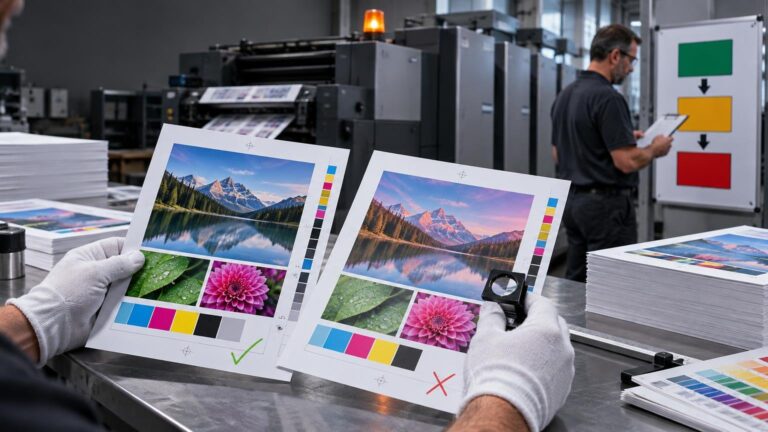
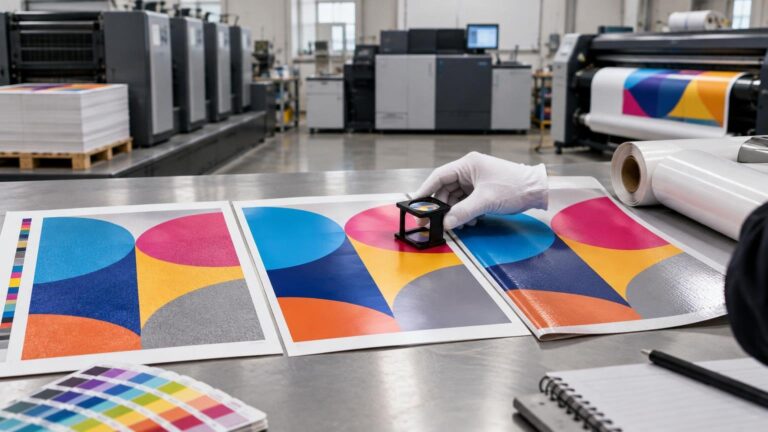
Training coverage turns broad advice into repeatable behavior. Better communication means collecting the right information, placing it where production can find it, assigning approval ownership, and escalating uncertainty before it reaches the press or finishing line. Better color control means defining the intended appearance, process, substrate, proof type, and viewing context rather than asking several devices to perform identical magic.
Use Hiles when comparing a print provider, preparing a specification, reviewing a proof, investigating a defect, or improving an operating process. Start with the decision closest to the current risk, identify what must be verified, and document the answer where the next person can use it. Print becomes much easier to manage when expectations survive the trip from quote to delivery.